
Business
Priority Infrastructure Plan: Strategy for Long-Term Success

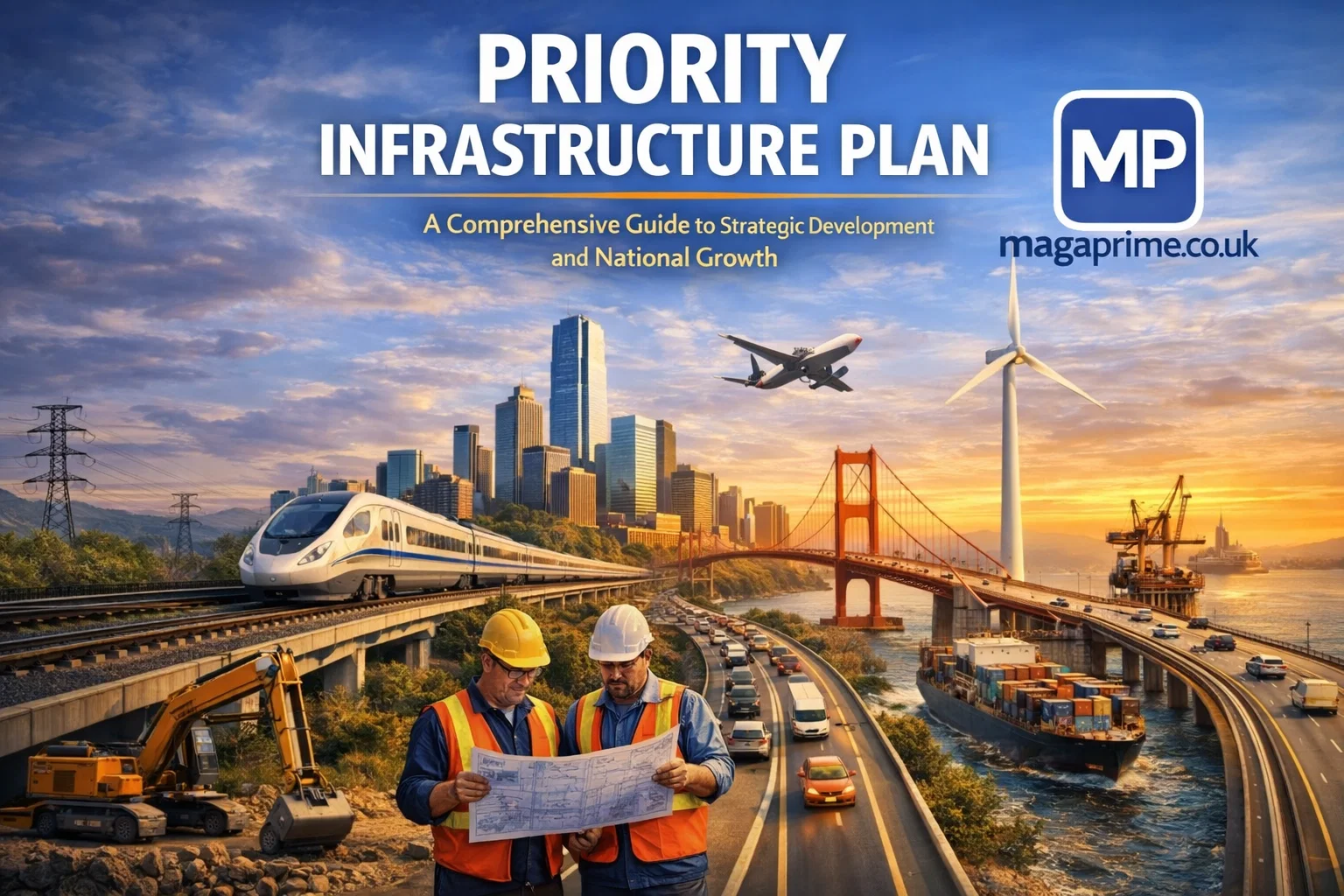
Introduction: Why Infrastructure Decisions Shape the Future
Infrastructure influences daily life in ways most people rarely notice. Roads enable trade, water systems protect public health, and digital networks connect economies across borders. Behind every functioning city lies careful infrastructure planning guided by long-term vision and responsible investment. As populations increase and environmental risks grow, governments must move beyond short-term construction decisions and adopt structured planning approaches that prioritize lasting value. Modern societies require infrastructure systems that are reliable, adaptable, and capable of supporting future generations without placing unnecessary strain on resources.
A priority infrastructure plan helps policymakers identify projects that create meaningful and sustainable outcomes. Instead of funding scattered initiatives, planners evaluate which investments improve economic stability, strengthen service delivery, and enhance community wellbeing. Infrastructure development strategy today focuses on balancing immediate needs with long-term resilience. Nations that succeed in this process develop stronger economies, attract innovation, and provide better living conditions for citizens. Infrastructure modernization therefore becomes a continuous effort rather than a one-time achievement, ensuring that development keeps pace with technological and social change.
Understanding the Meaning of a Priority Infrastructure Plan
A priority infrastructure plan represents a structured approach used to determine which public infrastructure projects should receive attention first. It integrates economic analysis, environmental considerations, and social impact assessments into a unified planning model. Governments apply this framework within national infrastructure planning systems to align investments with broader development goals. The objective is not simply to build more infrastructure but to build infrastructure that delivers measurable benefits over time.
Modern infrastructure prioritization replaces traditional decision-making that often depended on political urgency or short funding cycles. Through performance-based infrastructure planning, planners evaluate projects using clear criteria such as long-term value, accessibility improvements, and service reliability. Infrastructure governance ensures that decisions remain transparent and accountable while infrastructure policy frameworks guide consistent implementation. This process creates an infrastructure implementation roadmap that organizes projects logically and supports efficient infrastructure program management across agencies and regions.
Why Infrastructure Prioritization Matters More Than Ever
Rapid urban growth and technological transformation have increased pressure on existing infrastructure systems. Cities expand faster than older planning models anticipated, creating challenges related to congestion, housing demand, and utility reliability. Aging infrastructure upgrades now compete with new development needs, making prioritization essential. Governments must carefully balance repair and expansion while maintaining fiscal responsibility and meeting environmental commitments.
Infrastructure prioritization criteria help planners compare projects objectively using infrastructure feasibility analysis and cost-benefit analysis methods. These evaluations consider regional infrastructure planning requirements, infrastructure capacity expansion needs, and community infrastructure planning objectives. When priorities are clearly defined, infrastructure investment pipelines become more manageable and implementation timelines become realistic. This structured approach reduces delays and ensures that public sector infrastructure investments produce long-term societal value instead of temporary solutions.
Economic Growth and Competitive Advantage Through Infrastructure
Infrastructure plays a direct role in shaping economic performance. Efficient transport infrastructure improves logistics efficiency by reducing travel times and lowering operating costs for businesses. Reliable energy infrastructure ensures uninterrupted industrial activity, while digital infrastructure enables innovation and global connectivity. Together, these systems form the backbone of economic development infrastructure and influence how competitive a region becomes in the global economy.
Investment in public infrastructure projects stimulates economic activity both during and after construction. Job creation through infrastructure supports local employment while improved infrastructure service delivery attracts private investment. Regions with strong infrastructure investment plans often experience higher productivity and stronger regional economic growth. Strategic development plans align infrastructure modernization with industrial and technological advancement, ensuring that infrastructure investments support long-term prosperity rather than isolated economic gains.
Key Sectors Covered Under a Priority Infrastructure Plan
Infrastructure planning encompasses several interconnected sectors that must evolve together to achieve sustainable progress. Transport infrastructure remains essential for mobility and trade, including road infrastructure improvement, bridge modernization, railway development, and freight mobility improvement. Public transport expansion enhances accessibility while supporting green transportation systems that reduce environmental impact.
Energy infrastructure represents another critical area, particularly as countries transition toward renewable energy infrastructure and energy efficiency planning. Stable energy systems improve economic resilience and reduce environmental risks. Digital infrastructure supports digital connectivity expansion through broadband infrastructure and high-speed internet access, enabling innovation and expanding educational and economic opportunities.
Water and sanitation infrastructure protects public health and environmental stability through flood control systems, stormwater management, and climate adaptation planning. Social infrastructure strengthens communities by improving healthcare facility access, education infrastructure, and affordable housing infrastructure. Together, these sectors create integrated systems that improve community accessibility and support equitable infrastructure access.
Sustainability and Environmental Responsibility in Infrastructure Planning
Environmental sustainability has become a defining principle of modern infrastructure development strategy. Governments increasingly design projects that align with environmental sustainability goals while supporting long-term economic development. Sustainable infrastructure development focuses on reducing emissions, conserving resources, and minimizing ecological disruption throughout infrastructure lifecycle planning.
Climate resilience infrastructure plays a vital role in protecting communities from extreme weather events. Disaster-resistant infrastructure incorporates climate adaptation planning into design standards, ensuring durability under changing environmental conditions. Urban resilience strategies combine environmental planning with infrastructure investment to reduce risks associated with flooding, heatwaves, and resource shortages. By integrating sustainability into infrastructure decision-making, governments ensure that development today does not compromise future stability.
Building Resilient and Disaster-Ready Infrastructure
Resilience has become a central objective in infrastructure resilience planning. Modern infrastructure must withstand natural disasters, technological disruptions, and population pressures without service failure. Risk assessment planning allows engineers and planners to identify vulnerabilities before construction begins, reducing long-term infrastructure risk management challenges.
Disaster-resistant infrastructure includes reinforced transport systems, secure energy networks, and reliable water systems capable of operating during emergencies. Public safety infrastructure improvements protect communities while maintaining infrastructure service delivery during crises. Infrastructure asset management ensures ongoing monitoring and maintenance so that systems remain functional throughout their lifecycle. Resilient infrastructure not only reduces recovery costs but also strengthens public confidence in governance and planning institutions.
The Role of Technology in Future-Ready Infrastructure
Technology has transformed how infrastructure is designed, monitored, and managed. Smart infrastructure systems use data analytics to optimize performance and improve infrastructure outcomes measurement. Sensors embedded in roads, bridges, and utilities provide real-time information that supports proactive maintenance and service level improvement.
Digital infrastructure enables automation and advanced infrastructure program management tools that improve project delivery frameworks. High-speed internet access supports education, healthcare, and economic participation, especially in underserved regions. Infrastructure modernization increasingly relies on digital platforms that enhance infrastructure decision-making and allow planners to respond quickly to emerging challenges. Technology therefore becomes an essential partner in achieving efficient and adaptive infrastructure systems.
Governance, Transparency, and Accountability
Strong infrastructure governance ensures that projects deliver public value and maintain trust. Government infrastructure policy establishes regulatory oversight mechanisms that guide procurement planning and financial accountability. Transparent infrastructure decision-making processes reduce corruption risks and improve public confidence in infrastructure investments.
Governance accountability also requires clear performance monitoring systems. Infrastructure outcomes measurement evaluates whether projects achieve intended goals related to accessibility, efficiency, and sustainability. When infrastructure policy frameworks emphasize openness and accountability, stakeholders remain informed and engaged throughout implementation. Effective governance transforms infrastructure planning into a collaborative process rather than a closed administrative exercise.
Stakeholder Engagement and Public Participation
Infrastructure projects affect entire communities, making stakeholder engagement essential for successful planning. Community infrastructure planning encourages citizens, businesses, and local organizations to participate in decision-making processes. Public consultation helps planners understand social needs and identify potential challenges early in project development.
Inclusive participation improves equitable infrastructure access by ensuring that infrastructure investments serve diverse populations. Engagement also strengthens social acceptance, reducing project delays caused by opposition or misunderstanding. Collaboration between public agencies and private organizations fosters innovation and shared responsibility. Through active participation, infrastructure planning becomes more responsive and aligned with community expectations.
How Infrastructure Projects Are Evaluated and Prioritized
Project evaluation relies on structured methodologies designed to ensure fairness and effectiveness. Infrastructure prioritization criteria assess economic impact, environmental sustainability, and social benefits simultaneously. Cost-benefit analysis compares expected outcomes with project lifecycle costs, allowing planners to allocate resources efficiently.
Infrastructure scoring methodology incorporates project evaluation metrics such as transport connectivity improvements, service reliability, and regional development potential. Infrastructure feasibility analysis examines technical and financial practicality before approval. This systematic approach creates balanced infrastructure investment pipelines that support strategic objectives while minimizing risk. Prioritization therefore becomes a transparent and evidence-based process rather than subjective decision-making.
Funding and Investment Strategies
Infrastructure financing requires diverse funding sources to support large-scale development. Governments often combine public funding with public-private partnerships to share risks and accelerate project delivery. Infrastructure funding strategies must consider long-term maintenance costs alongside initial construction expenses.
Infrastructure investment plans rely on careful financial modeling and procurement planning to ensure sustainability. Private sector participation introduces innovation and efficiency while maintaining governance accountability. Infrastructure financing mechanisms also support regional infrastructure planning by directing investment toward underserved areas. Balanced funding approaches enable consistent infrastructure capacity expansion without overwhelming public budgets.
The Role of the Private Sector in Infrastructure Development
Private sector involvement has become increasingly important in modern infrastructure development strategy. Businesses contribute expertise, innovation, and operational efficiency through collaborative delivery models. Public-private partnerships allow governments to leverage private investment while maintaining oversight and public interest protections.
Private organizations often introduce advanced technologies that enhance infrastructure modernization and service delivery. Collaboration encourages knowledge sharing and improves project delivery frameworks. When supported by clear regulatory oversight, private participation accelerates infrastructure implementation while maintaining transparency. Effective partnerships therefore strengthen both economic outcomes and infrastructure quality.
Monitoring, Maintenance, and Long-Term Performance
Infrastructure success depends not only on construction but also on long-term maintenance and monitoring. Infrastructure asset management systems track performance and identify maintenance needs before failures occur. Asset maintenance planning reduces long-term costs while improving system reliability.
Performance monitoring evaluates infrastructure service delivery and ensures continuous improvement. Infrastructure lifecycle planning considers maintenance from the earliest design stages, preventing future financial burdens. Regular evaluation supports service level improvement and ensures infrastructure outcomes align with strategic goals. Sustainable infrastructure systems require consistent oversight to remain effective over decades.
Infrastructure as a Catalyst for Innovation and Social Progress
Infrastructure investment often triggers broader innovation across industries. Improved digital connectivity expansion enables entrepreneurship, remote work, and digital creator audience growth. Enhanced transport networks support global trade and regional collaboration. Infrastructure therefore acts as a foundation for innovation ecosystems that encourage economic diversification.
Social progress also benefits from improved infrastructure. Education infrastructure expands learning opportunities, while healthcare facility access improves public wellbeing. Community accessibility increases participation in economic and social activities. Infrastructure investment benefits extend beyond physical construction by shaping opportunities, improving equity, and strengthening societal resilience.
Urban Planning, Smart Cities, and Future Development Models
Urban infrastructure development increasingly integrates smart city concepts that combine technology with sustainable planning principles. Municipal infrastructure planning aligns transportation, housing, utilities, and digital systems into coordinated urban environments. Planning scheme integration ensures efficient land use and supports balanced city growth.
Smart mobility solutions improve traffic management while reducing emissions. Urban resilience strategies prepare cities for environmental and demographic changes. Integrated planning supports affordable housing infrastructure and equitable access to services. Future cities depend on infrastructure systems that adapt continuously to technological innovation and evolving social needs.
The Future of Priority Infrastructure Planning
The future of infrastructure planning will focus on adaptability, sustainability, and innovation. Climate adaptation planning will guide project design, ensuring resilience against environmental uncertainty. Infrastructure modernization will increasingly rely on digital tools that enhance forecasting and performance evaluation.
Long-term infrastructure planning will emphasize collaboration between governments, private investors, and communities. Infrastructure decision-making will become more data-driven, enabling smarter allocation of resources. As global challenges evolve, priority infrastructure planning will remain essential for maintaining economic stability and improving quality of life. The ability to anticipate change will define successful infrastructure strategies in the coming decades.
Conclusion
Infrastructure shapes economic strength, environmental sustainability, and social wellbeing. A priority infrastructure plan provides the structure needed to align investments with long-term development goals. Through careful infrastructure prioritization, transparent governance, and sustainable funding strategies, societies can build systems that support growth while protecting future generations.
Strategic infrastructure frameworks ensure that public infrastructure projects deliver measurable outcomes rather than temporary improvements. By integrating resilience, technology, and community engagement, infrastructure planning becomes a driver of innovation and stability. The future depends on decisions made today, and thoughtful infrastructure planning ensures that progress remains inclusive, sustainable, and resilient.
FAQs
What is a priority infrastructure plan?
A priority infrastructure plan is a structured framework used to identify and implement the most important infrastructure projects based on long-term impact.
Why is infrastructure prioritization important?
It ensures limited resources are invested in projects that deliver the greatest economic and social benefits.
How does infrastructure support economic growth?
Infrastructure improves connectivity, efficiency, and productivity, which attract investment and create jobs.
What role does sustainability play in infrastructure planning?
Sustainability ensures infrastructure reduces environmental impact while remaining resilient to climate risks.
How are infrastructure projects evaluated?
Projects are assessed using cost-benefit analysis, risk assessment planning, and performance evaluation metrics.


Every construction site is different, but there is one challenge that is common across projects of all sizes: finding enough space. Whether you are working on a busy city centre development, a school extension or a healthcare facility, space is often limited. Materials, machinery, welfare facilities and site offices all need room, which makes good site planning essential.
Portable buildings and portable cabins offer a practical solution. They provide the facilities contractors need while making better use of available area, and because they can be relocated or stacked vertically as double stacked cabins, they have the ability to adapt as your project develops.
Why Space Planning Matters More Than Ever
Construction sites have become more complicated over recent years. Developments are often taking place on smaller plots, especially within towns and cities where every metre of land is already being used. Larger developments can also face restrictions because of neighbouring properties, access roads or protected areas that mean less usable space is available.
Also, the number of facilities needed on-site keeps growing. Contractors need somewhere for site managers to work, welfare areas for employees to take breaks, changing facilities, toilets, meeting rooms, secure storage and reception areas for visitors. All of these are essential for keeping a project running smoothly, but together they can take up a lot of room.
Why Portable Cabins are the Ideal Solution
If you have limited space, flexibility becomes one of the best things you can have. This is where portable buildings are ideal for your project.
Because they are manufactured off-site and delivered ready for installation, portable cabins can be positioned quickly with minimal groundwork. Instead of committing to a permanent location, these portable buildings can be moved as different phases of the project progress, allowing your site layout to evolve with your project.
For example, during the early stages of a project, a portable cabin might be located close to the site entrance as a reception. As construction develops, that portable cabin can be moved to make way for additional storage or better vehicle access without needing a completely new building.
One of the biggest advantages of portable cabins is how versatile they are. These portable buildings can be used as:
- Site offices
- Welfare facilities
- Canteens
- Changing rooms
- Toilets and shower facilities
- Meeting rooms
- Security cabins
- Storage units
Because portable cabins can be used in so many different ways, contractors can create a site layout that suits the specific needs of each project without investing in permanent structures.
Designing a More Efficient Site Layout
Making the most of your available space improves productivity, supports a safer working environment and helps projects run better from start to finish.
Keeping welfare facilities together in one dedicated area would create a far more efficient site rather than scattering individual units around. By grouping portable buildings, break rooms and changing facilities together, employees spend less time walking between locations.
Good planning also helps the site develop over time. A portable cabin that is perfectly positioned during groundworks might become an obstacle once other work begins. Because portable cabins can be relocated, contractors can adapt the site layout as the project develops.
Planning for Every Stage of the Project
Construction sites rarely stay the same from beginning to end. As projects move from groundworks to structural work, the amount of space available and the way it is used can change significantly. Choosing versatile portable buildings gives contractors the ability to adapt without disrupting the project. Units can be moved to suit new site layouts, allowing access routes, storage areas and working zones to be kept clear as work progresses. Being able to maintain an organised site throughout the build makes it much easier to manage any changes while keeping facilities close to where they are needed most.
Why Double Stacked Cabins Make Sense on Space-Restricted Sites
While portable cabins offer great flexibility, there are times when even the most carefully planned sites start to run out of room. On projects where every square metre is already being used, expanding across the site isn’t an option. That is where double stacked cabins become a great solution.
Rather than adding more single-storey facilities, double stacked cabins allow you to build upwards. By stacking one unit on top of another, double stacked cabins create two levels of usable space while taking up the same amount of ground. It is a straightforward but highly effective way of maximising your site layout without losing valuable working areas.
For example, when using double stacked cabins, the ground floor could be used as a canteen, drying room and toilet facilities, then the upper level could be site offices and meeting rooms. You would then have a compact building made of double stacked cabins that keeps essential facilities together while freeing up more space for materials, equipment and day-to-day construction work.
Maximise Space with Phoenix Building Systems
Limited space doesn’t have to limit your project.
With careful planning and the right site accommodation, even the tightest construction sites can remain organised and productive. Portable buildings provide a flexible solution that makes it easier to have offices, welfare facilities and storage without taking up more room than needed. When ground space becomes even more limited, double stacked cabins offer an effective way to create extra floor area while keeping the same footprint.
As experienced manufacturers of high-quality portable buildings, Phoenix Building Systems works closely with contractors across the UK to deliver practical solutions for projects of all sizes. From individual portable cabins to bespoke double stacked cabins, every building is designed to help you make the most of your available space.
Whether you are managing a city centre development, a school extension or a larger project, choosing the right portable buildings can really help your project run smoothly. By maximising every square metre with portable cabins, you will create a safer, more efficient working environment.
If you’re planning your next construction project or need to make better use of a restricted site, contact our friendly team at Phoenix Building Systems to discuss the right double stacked cabins or portable cabin building solution for your needs.


Modern bakeries work in a competitive market where quality, speed, and consistency all matter. Customers expect fresh products, smooth textures, balanced taste, and reliable service. At the same time, bakery owners need to manage staff, ingredients, production schedules, and daily orders. To handle all these needs, a bakery must use equipment that supports professional and efficient operations.
For bakeries, cafés, restaurants, hotels, and commercial food production businesses, a Gear Driven Planetary Mixer can help improve preparation quality, reduce manual effort, and support smoother kitchen performance. It gives bakery teams more control over dough, batter, cream, frosting, and other important mixtures used in daily production.
A strong mixer is not just a machine in the kitchen. It is part of the complete production system that helps a business prepare better products with more confidence.
The Changing Needs of Bakery Businesses
Bakery businesses are changing quickly. Many bakeries no longer prepare only one or two products. They may offer bread, cakes, cookies, pastries, pizza bases, muffins, cream desserts, and seasonal items. Some also supply products to cafés, restaurants, hotels, and event clients.
With more product variety, the kitchen needs better preparation systems. Manual methods can become slow, tiring, and inconsistent. Small machines may not handle repeated commercial use. This is why professional equipment is important for bakeries that want to grow and maintain quality.
The right mixer helps the team manage different recipes while keeping production organized.
Why Mixing Is a Key Part of Bakery Success
Mixing is one of the first and most important steps in bakery production. It affects how ingredients combine and how the final product develops. If the mixture is not prepared correctly, the final result may suffer even if the recipe and ingredients are good.
Bread dough needs proper strength. Cake batter needs smooth blending. Cookie dough needs even ingredient distribution. Cream and frosting need the right texture and stability. Each product depends on controlled mixing.
Good mixing can help improve:
- Product texture
- Dough development
- Batter smoothness
- Cream stability
- Ingredient distribution
- Baking results
- Customer satisfaction
When this step is handled properly, the bakery can produce better results more consistently.
Reducing Manual Work in the Kitchen
Bakery work can be physically demanding. Staff often need to lift ingredients, prepare dough, manage ovens, decorate products, pack orders, and clean the kitchen. If they also have to spend too much energy on manual mixing, the work becomes harder.
Professional mixing equipment reduces this pressure. It handles difficult mixing tasks and helps staff complete preparation faster. This does not remove the importance of skilled workers. Instead, it allows workers to focus on tasks where their skill matters most, such as shaping, baking, finishing, and quality checking.
When staff have better tools, the whole kitchen becomes more productive.
Supporting More Organized Production
A bakery needs a clear production flow. Ingredients must be prepared, mixed, baked, cooled, decorated, and packed on time. If one stage becomes slow, the entire workflow can be affected.
A reliable mixer helps keep the preparation stage moving. It allows the team to prepare batches more efficiently and continue to the next step without unnecessary delays.
This is especially useful during:
- Morning production hours
- Weekend rush periods
- Festival and holiday seasons
- Large customer orders
- Restaurant or café supply orders
- Event and catering production
Better equipment helps the bakery work with a more organized schedule.
The Value of Planetary Mixing
Planetary mixers are useful because of their special mixing movement. The attachment rotates around its own axis while also moving around the bowl. This helps the tool reach different areas inside the bowl and mix ingredients more evenly.
This type of mixing is suitable for many bakery and food preparation tasks. A bakery can use it for dough, batter, cream, frosting, icing, fillings, and other soft mixtures.
The versatility of planetary mixers makes them valuable for businesses that prepare different products in one kitchen. With suitable attachments and settings, one machine can support several tasks.
Why Gear Driven Design Is Useful
Commercial kitchens need machines that can handle repeated work. Some mixtures are light and easy, while others are heavy and thick. Bread dough, pizza dough, and dense cookie dough can create pressure on weak machines.
A gear driven design helps transfer power more strongly and steadily. This supports better performance during heavy mixing tasks. It also helps the machine work more reliably when used several times a day.
For businesses that need stable daily output, a gear driven mixer can support stronger production confidence.
Improving Daily Kitchen Efficiency
Efficiency is important because bakery production depends on timing. If preparation takes too long, baking and finishing may also be delayed. A professional mixer helps reduce preparation time and makes kitchen work smoother.
For example, while the mixer prepares dough or batter, staff can measure ingredients for the next batch, prepare trays, check ovens, or work on decorations. This better use of time can help the bakery complete more orders without adding unnecessary pressure.
Efficient kitchens are usually more organized, less stressful, and better at maintaining quality.
Middle-Stage Solution for Growing Bakeries
Many bakeries begin with simple tools, but as demand increases, those tools may not be enough. When a business starts receiving more orders or adding more products, it needs equipment that can support growth.
At this stage, a Gear Driven Planetary Mixer can help bakeries improve daily preparation, manage heavier workloads, and maintain better consistency across different recipes.
This makes it a useful option for businesses that want to move from basic preparation to more professional production.
Helping Maintain Product Consistency
Consistency is one of the biggest reasons customers return to a bakery. If they enjoy a product once, they expect the same quality next time. Inconsistent products can hurt customer trust.
A professional mixer helps maintain consistency by making the mixing process more repeatable. When speed, time, and batch size are controlled, the final product is more likely to stay the same.
This is important for bakeries that sell directly to customers and also for those that supply other businesses. Restaurants, cafés, and hotels expect dependable quality from their suppliers.
Reducing Waste and Failed Batches
Poor mixing can lead to failed products. If dough is uneven, bread may not rise properly. If batter has lumps, cakes may bake badly. If cream is unstable, decoration may not hold its shape.
Failed batches waste ingredients, time, labor, and energy. A better mixer helps reduce these risks by improving the preparation process.
Less waste means better cost control. It also allows the bakery to use ingredients more efficiently and protect profit margins.
Supporting Different Types of Recipes
A modern bakery often needs flexibility. One day may require bread dough and muffins, while another day may include cakes, cookies, pizza dough, or pastry fillings. Equipment should support this variety.
A strong mixer can help prepare:
- Bread dough for loaves, buns, and rolls
- Pizza dough for cafés and restaurants
- Cake batter for sponge cakes and cupcakes
- Muffin batter for breakfast items
- Cookie dough for biscuits and snacks
- Whipped cream for desserts
- Buttercream, frosting, and icing
- Pastry fillings and soft mixtures
- Sauces and blended food preparations
This flexibility helps the bakery serve more customers and expand its menu.
Better Staff Training and Process Control
When equipment supports a clear process, staff training becomes easier. New workers can learn standard mixing times, speed settings, and batch procedures. This reduces dependence on guesswork.
Process control is important for any bakery that wants to grow. If only one experienced worker knows how to prepare a recipe correctly, production becomes risky. A reliable mixer helps create a repeatable system that more team members can follow.
This supports better teamwork and smoother daily operations.
What to Check Before Choosing a Mixer
Before buying commercial bakery equipment, business owners should think about their real kitchen needs. The best mixer is the one that matches the bakery’s workload, product range, and future goals.
Important points to consider include:
- Bowl capacity for regular batch sizes
- Motor power for light and heavy mixtures
- Gear driven system for stable performance
- Speed settings for recipe control
- Durable body construction
- Easy cleaning and maintenance
- Safety features for staff
- Attachments for different tasks
- Kitchen space and machine size
- Supplier reliability and product support
A careful choice can help the machine provide better long-term value.
Long-Term Impact on Business Growth
Good equipment can support business growth in many ways. It helps the bakery prepare more products, handle larger orders, maintain quality, and reduce production problems.
When preparation becomes faster and more consistent, the business can serve customers better. It can also accept more opportunities, such as wholesale orders, catering requests, and menu expansion.
A reliable mixer is not only useful for today’s production. It can also support the future growth of the business.
Final Thoughts
Modern bakery operations need more than recipes and ingredients. They need reliable systems that support quality, speed, and consistency. Mixing equipment plays a key role because it affects many products before they reach the oven or display counter.
A strong commercial mixer helps reduce manual work, improve batch control, support recipe variety, and make daily production more efficient. It also helps bakeries reduce waste and build customer trust through consistent results.
For businesses looking for dependable bakery machinery and commercial kitchen equipment, mirabake.com can be a useful name to consider when exploring professional solutions for long-term production success.


You just bought a beautiful cocktail dress and it is very soft, perfectly fitted and the best color for an upcoming event so you hang it in your closet and then imagine how you will look in it but then you start to worry. Will every small bump show? Will the fabric stick to the wrong areas? Will you spend the whole night pulling and fixing your dress instead of enjoying yourself? The truth is that even an expensive dress needs the right thing underneath it and that thing is shapewear.
Look for Targeted Tummy Control First
When wearing a fitted cocktail dress the tummy area is what many women worry about the most and it is completely normal. The good news is that the right shapewear can make a big difference. What you need is called the best tummy control shapewear and this does not mean making your body feel extremely tight. It means giving smooth and even support that helps create a nice body shape.
The best tummy control shapewear uses special compression in the right areas which means it shapes the parts that need support and stays comfortable in other areas.
Why Bodysuits Are Perfect for Cocktail Dresses
For most of the cocktail dresses a bodysuit is the best option because a bodysuit smooths your whole body at the same time and it helps shape your stomach, back, hips and even your butt. It creates one smooth and clean body line from your shoulders to your thighs.
There are no separate pieces that move or roll down. A good bodysuit stays in place after you wear it. Shapellx has bodysuits with different support levels. For party dresses and formal clothes, strong support or super strong support is a good choice. These support levels give more shaping and work very well for special occasions.
The Magic of Shaper Shorts Under Shorter Dresses
Not every cocktail dress looks good with a full bodysuit. If your dress is short or has a very low back then bodysuit may be visible. In these situations shaper shorts are a better choice because good shaper shorts help shape your tummy and thighs without covering your upper body.
They are great for fit-and-flare dresses, A-line cocktail dresses or dresses that are loose at the top and tight at the bottom. Shaper shorts also help stop thigh rubbing which is very helpful if you will stand or walk for many hours.
Shop Smart: Check the Shapewear for Sale Section
Shapewear for evening dresses can feel like extra spending. You already paid for the dress, shoes, and accessories, so buying shapewear may feel like too much. But here is a smart shopping tip: always look at the shapewear for sale section first.
The shapewear for sale section usually includes many items like shorts, bodysuits, waist trainers and slips. Shapellx also often gives extra discount codes. For example, you may get an extra 15% off on orders over $120 with a code like PD15. Free shipping is also available on orders over $80.
How to Choose the Right Support Level
For evening dresses you usually need more support than you use in daily life. Here is a simple guide. Light support is not enough for most cocktail dresses. It gives only a little smoothing and not much shaping.
Mid support is good for dresses that are not very tight. It gives visible smoothing while still feeling comfortable. Strong support is the best choice for most cocktail dresses and evening gowns. It gives strong shaping and makes a big difference in how your outfit looks. Super strong support is best for very tight dresses or when you want the maximum shaping effect.
Final thought
Your cocktail dress needs the right shapewear underneath. Do not let bad shapewear spoil your night. You deserve to feel smooth, confident and comfortable from the beginning of the party until the last dance. Start with the best tummy control shapewear which uses directional compression and a nylon spandex blend. You can choose a bodysuit for full body coverage or shaper shorts for shorter dresses and also check the shapewear for sale section to save money.


Do Automatic Watches Need a Watch Winder? A Complete Guide for Collectors

Tattoo Culture as a Medium for Storytelling

The Art of Modern Lash Designs

Meet Isaac Avett: Son of Seth Avett and Jennifer Carpenter

Keala Winterhalt: Childhood, Career, and Family Roots

The Inspiring Story of Shea Joelle James in Hollywood
-
 celebrity9 months ago
Meet Isaac Avett: Son of Seth Avett and Jennifer Carpenter
-
 celebrity9 months ago
Keala Winterhalt: Childhood, Career, and Family Roots
-
 celebrity9 months ago
The Inspiring Story of Shea Joelle James in Hollywood
-

 celebrity9 months ago
The Untold Story of Lola Jade Fielder-Civil
-

 celebrity9 months ago
Milo William Langdon: Life of Liv Tyler’s Youngest Son
-

 celebrity9 months ago
How Melanie Lynn Clapp Built a Creative Empire
-

 celebrity8 months ago
Jacelyn Reeves’ Life: Motherhood, Privacy, and Legacy in Hollywood
-

 celebrity9 months ago
How Wendy Etris and A.J. Styles Balance Family and Fame