Sports
Eagles Rookie Trade Attempt Strategy Breakdown and Full Analysis

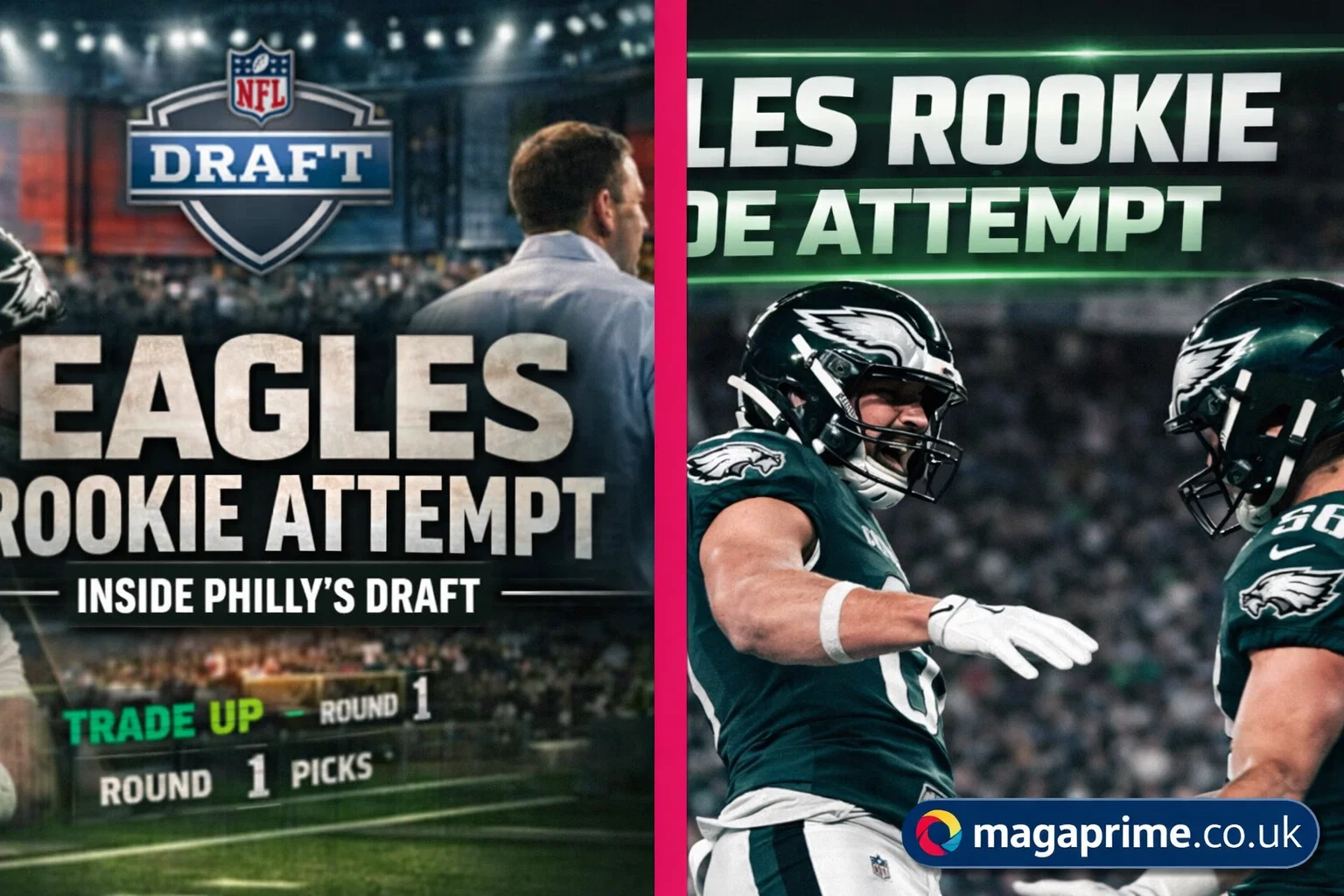
Introduction to the Eagles Rookie Trade Attempt
The eagles rookie trade attempt created intense discussion across the nfl community. Fans, league insiders, and sports analysts closely followed every update. The move reflected a clear intention from the Philadelphia Eagles to stay aggressive. The team has built a strong identity through bold decisions. This attempt highlighted their focus on growth and long-term success.
The nfl draft always brings excitement and uncertainty. Teams often use draft trade strategies to improve their roster. The Eagles followed a similar approach with careful planning. Their front office aimed to secure a rookie player who could add value. This situation showed how modern trade discussions shape team performance. It also revealed how teams react under pressure during critical moments.
Quick bio table
| Category | Details |
|---|---|
| Main Topic | Eagles rookie trade attempt |
| Team Name | Philadelphia Eagles |
| League | NFL |
| Key Figure | Howie Roseman |
| Event Type | NFL Draft trade attempt |
| Strategy Focus | Draft strategy and trade strategy |
| Objective | Acquire high-impact rookie player |
| Target Positions | Defensive back, cornerback |
| Notable Prospects | Kelee Ringo, Jihaad Campbell |
| Outcome | Unsuccessful trade attempt |
| Key Factors | Trade value, draft capital, negotiations |
| Team Approach | Long-term vision and roster construction |
| Financial Aspect | Salary cap management and rookie contract |
| Development Focus | Player development and training camp performance |
| League Context | NFL trade culture and league dynamics |
| Impact on Team | Increased competition and depth chart adjustments |
| Strategic Lesson | Improve trade leverage and risk assessment |
| Future Outlook | Continued focus on draft-day trades and talent acquisition |
Background of the Philadelphia Eagles Strategy
The Philadelphia Eagles have developed a consistent franchise strategy in recent seasons. They focus on roster construction through smart draft capital use. Their approach balances immediate needs and long-term vision. This method keeps them competitive in a tough league.
General manager Howie Roseman plays a central role in these decisions. He studies draft analytics and scouting reports carefully. He also considers trade leverage before making any move. His leadership supports strong team management and efficient planning. As a result, the Eagles maintain flexibility under the salary cap.
Understanding the Rookie Trade Attempt
The eagles rookie trade attempt was part of a larger nfl offseason strategy. The team wanted to secure a high-impact rookie through a draft trade. This move aimed to strengthen key positional needs. It also reflected a desire to improve the depth chart.
Teams often explore draft-day trades to gain an advantage. They may move up draft board to secure elite talent. They may also trade down in draft to gain future draft picks. In this case, the Eagles evaluated both options carefully. Their goal was to balance cost vs reward while improving roster balance.
Draft Strategy and Trade Decisions
Draft strategy involves detailed planning and quick decisions. The Eagles used a mix of scouting, analytics, and player evaluation. Their front office studied draft positioning and trade market demand. This process helped them identify the right opportunity.
Trade decisions often depend on risk assessment and timing. Teams must evaluate player potential and long-term value. The Eagles focused on talent acquisition while protecting draft capital. This approach reflects strong strategic planning. It also shows how teams build a competitive roster through smart moves.
Key Rookie Prospects in Focus
During the trade attempt, several rookie prospects attracted attention. Players like Kelee Ringo and Jihaad Campbell represent the type of talent teams value. These athletes offer strong physical skills and growth potential.
The focus on a defensive back or cornerback position showed clear intent. The team wanted to improve defensive strategy and coverage. These prospects fit well into the player fit system. They also align with the team’s long-term goals. Strong scouting reports supported these decisions.
Why the Trade Attempt Failed
The trade attempt did not succeed due to several factors. Trade negotiations often involve complex discussions between teams. A lack of agreement on trade value may have played a role. Differences in compensation picks and future draft picks also matter.
Market competition can increase pressure during draft-day trades. Other teams may offer better deals to a trade partner. This situation creates challenges for even the best front office decisions. Although the attempt failed, it still provided useful insights. The team can apply these lessons in future trade discussions.
Impact on Team Roster and Depth Chart
The unsuccessful trade did not stop the Eagles from improving their team roster. They focused on depth chart competition during training camp. This created opportunities for existing rookie players. It also increased overall team performance.
Strong player competition helps improve training camp performance. Coaches can evaluate talent more effectively. This process supports better player utilization and decision making. It also reduces roster depth issues over time. As a result, the team remains flexible and prepared.
Role of the Front Office and Management
The front office plays a critical role in every trade attempt. Team management must balance financial considerations and performance goals. The Eagles have shown strong leadership in this area. Their decisions reflect careful planning and analysis.
Howie Roseman continues to guide the organization with confidence. He focuses on cap management and long-term success. His approach supports both offensive strategy and defensive strategy. This balance is essential in modern nfl team building. It also ensures stability within the organization.
NFL Trade Culture and League Dynamics
The nfl trade culture has evolved significantly in recent years. Teams now rely on data and analytics more than ever. League dynamics also influence trade discussions and decisions. This environment creates both opportunities and challenges.
Media speculation and trade buzz often shape public perception. Fan reactions can add pressure on team management. League insiders provide insights that influence sports coverage. These factors make every trade attempt more complex. Teams must stay focused despite external noise.
Financial Considerations and Salary Cap
Financial planning is a key part of any trade strategy. The Eagles manage their salary cap carefully. Rookie contracts play an important role in controlling costs. This allows teams to invest in other areas.
Cap management supports team flexibility and long-term growth. It also helps maintain a competitive roster. The Eagles use financial considerations to guide their decisions. This approach reduces risk and improves stability. It also protects their championship window.
Training Camp and Player Development
Training camp is where player development becomes visible. Coaches evaluate each rookie prospect carefully. The rookie development curve varies for each player. This process helps identify strengths and weaknesses.
Training camp performance influences depth chart decisions. Coaches must balance player competition and team needs. Strong coaching decisions improve overall performance. This phase also supports young talent management. As a result, the team builds a solid foundation.
Strategic Lessons from the Attempt
The eagles rookie trade attempt offers valuable lessons for the future. Every failed trade attempt provides learning opportunities. Teams can improve their trade leverage and negotiation strategies. This helps them make better decisions next time.
Understanding trade market demand is essential. Teams must also analyze risk vs reward carefully. The Eagles can refine their draft analytics process. These improvements support stronger strategic planning. They also enhance overall team performance.
Balancing Risk and Reward in Trades
Every trade involves a balance between risk and reward. Teams must consider long-term vision and immediate needs. The Eagles focus on maintaining roster balance and flexibility. This approach reduces potential losses.
Risk assessment plays a major role in decision making. Teams evaluate player potential and future impact. They also consider organizational goals and team future outlook. This careful analysis supports better outcomes. It also strengthens franchise strategy.
Future Outlook for the Eagles
The future outlook for the Philadelphia Eagles remains strong. Their consistent approach to nfl team building supports success. The team will continue exploring draft-day trades and opportunities. They aim to secure high-impact rookie talent.
Strong planning and leadership will guide future decisions. The Eagles will focus on improving player development and roster construction. They will also adapt to changing league dynamics. This flexibility ensures long-term competitiveness.
Key Decision Factors Table
| Factor | Importance Level |
|---|---|
| Draft Capital | High |
| Player Evaluation | Very High |
| Salary Cap | High |
| Trade Market Demand | Medium |
Conclusion
The eagles rookie trade attempt reflects a modern approach to nfl strategy. The Philadelphia Eagles continue to focus on smart decisions and long-term planning. Even though the trade did not succeed, it highlighted their commitment to growth. Their approach to roster construction and draft strategy remains strong.
The team understands the importance of adaptability. They continue to learn from each experience. This mindset supports long-term success in a competitive league. The Eagles remain a strong example of effective team management. Their future looks promising with continued focus and discipline.
FAQs
What was the eagles rookie trade attempt about?
The eagles rookie trade attempt was an effort to acquire a rookie player during the nfl draft through a trade strategy.
Why did the trade attempt fail?
The trade likely failed due to disagreements in trade value and lack of agreement with a trade partner.
Who leads the Eagles trade decisions?
General manager Howie Roseman leads the team’s trade discussions and strategic planning.
How does this affect the team roster?
It increases player competition and improves evaluation during training camp.
Will the Eagles attempt more trades in the future?
Yes, the team often participates in draft-day trades and will continue exploring new opportunities.



Dorrie Hall: Life Behind Hollywood Spotlight

Cheryl Johnson-LaVine: Life Behind NBA Star Zach LaVine

Jakobi Wilburn: Rising Star in Hip-Hop Music Scene

Meet Isaac Avett: Son of Seth Avett and Jennifer Carpenter

Keala Winterhalt: Childhood, Career, and Family Roots

The Untold Story of Lola Jade Fielder-Civil
-
 celebrity3 months ago
Meet Isaac Avett: Son of Seth Avett and Jennifer Carpenter
-
 celebrity3 months ago
Keala Winterhalt: Childhood, Career, and Family Roots
-
 celebrity3 months ago
The Untold Story of Lola Jade Fielder-Civil
-

 celebrity3 months ago
Milo William Langdon: Life of Liv Tyler’s Youngest Son
-
 celebrity3 months ago
The Inspiring Story of Shea Joelle James in Hollywood
-

 celebrity3 months ago
How Melanie Lynn Clapp Built a Creative Empire
-

 celebrity3 months ago
How Wendy Etris and A.J. Styles Balance Family and Fame
-

 celebrity3 months ago
Megan Wallace Cunningham: A Quiet Life Beyond Celebrity Fame